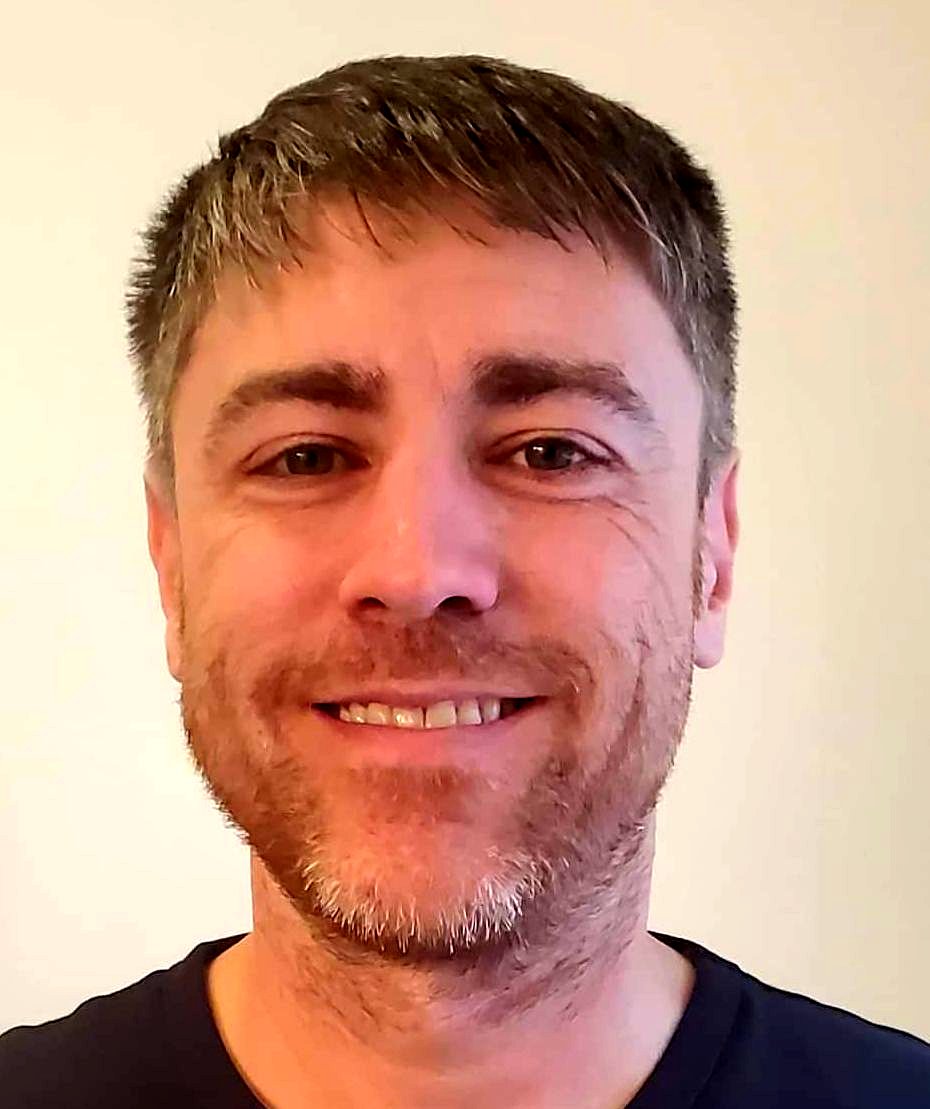
My name is Chad. I am a care partner to my wife, Adrienne, who was diagnosed with Multiple Myeloma in October 2020.
Becoming a care partner is one of the most natural roles anyone can step into—and yet, it is also one of the least supported. When the person you love faces a life-altering diagnosis like multiple myeloma, you don’t think twice. You show up. You drive to appointments, you take notes, you chase down lab results, and you remember the questions they forget to ask. You learn a whole new language—oncology, hematology, infusion, palliative care—reading so many prescription labels that random z’s and q’s start sneaking into your text messages. And still, you make dinner. You tell jokes. When the rest of the world moves on, you’re there to hold their hand.
Care partners embody a quiet, invisible, daily strength. But here’s the paradox: that same strength can make us disappear. Our instinct is to pour ourselves out for someone else. We focus entirely on their pain, their dignity, their fight—and in doing so, we begin to fade. We postpone our own doctor visits. We ignore our mental health. We lose sleep. We lose balance. We forget who we are outside the role of “the one who holds it together.” When we finally look up, we’re fragile, overwhelmed, and less able to serve the very purpose that brought us here—to be the steady ground under someone else’s feet.
Care partners are not just helpful—we’re essential. We are not backup—we are frontline. Yet, we’re expected to navigate a healthcare system that rarely sees us, communicates in fragments, values efficiency over humanity, and often treats life—and quality of life—as a zero-sum equation where resources are divided more by privilege than by need. It’s as if we can either fight the disease or feel human; as if we must choose between living longer and living better.
We are told to advocate, to ask questions, to push back—but no one tells us how, and no one builds us into the equation of care in a way that’s sustainable.
I believe that has to change.
Care partners deserve recognition and resources—not just out of compassion, but because the quality of patient care depends on it. You can’t ask someone to be a lighthouse and then ignore them when the power starts to flicker.
This journey is hard. It’s sacred. And it’s not something anyone should have to do invisibly.
So, I speak not just as a care partner, but as someone who believes that honoring life—and the people who carry it forward in the shadows—should never end in a zero-sum equation.