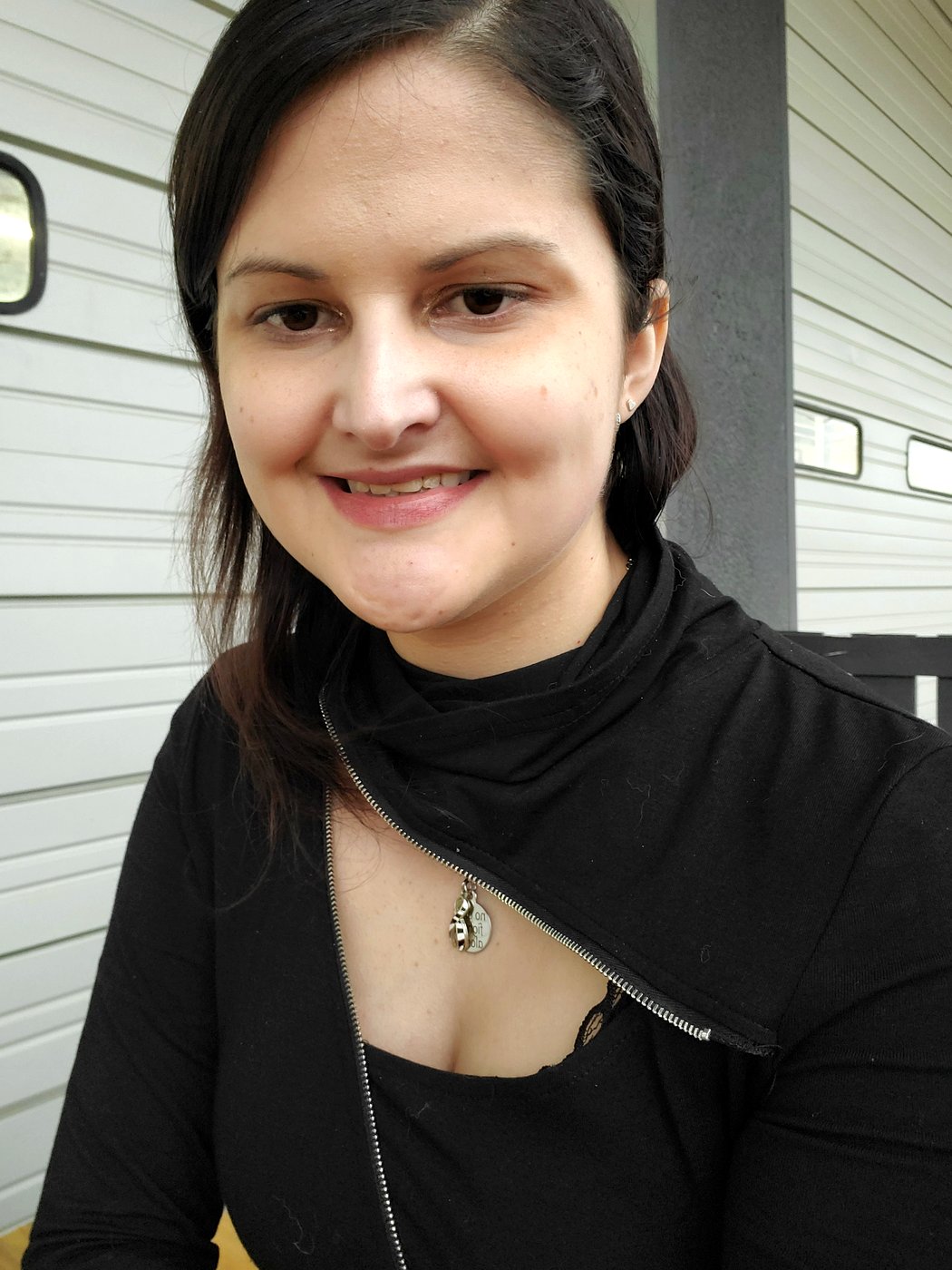

In 2018, I was diagnosed with Idiopathic Intracranial Hypertension. Before being diagnosed, I was at the height of my career in the retirement industry, working full-time and enjoying my favorite activities. Since diagnosis, I’ve left that industry and now work part-time from home, and I’ve learned that I can no longer enjoy some of the things that I used to.
This is a rare condition where they don’t know the cause or how to cure it. Doctors often attribute it to being overweight and/or females of child-bearing age, but people of average weight, males, and children can get it as well.
This condition causes an excess amount of spinal fluid to build up around the brain. Some of the symptoms I experience daily are pressure in my head, dizziness, vertigo, brain fog, and headaches. For some people, it can cause blindness, loss of hearing, and even strokes.
Because this condition presents similarly to what people with elevation sickness and hydrocephalus experience, it’s often treated likewise: with heavy-duty diruetics, and when that doesn’t help, sometimes stents or shunts are placed in the skull to help the CSF fluid move out. Both of these procedures have risks, and they’re not always successful in providing relief.
When I was first diagnosed with this condition, I started taking a medication called Diamox - a heavy diuretic. I experienced severe side effects such as fatigue, increased brain fog, and extreme digestive issues, including a loss of appetite. That combined with other digestive issues left me extremely dehydrated. I also felt no relief in my symptoms, and after a month my doctor and I determined that this was not a sustainable treatment plan for me.
My doctor wanted to switch me to another medication, but I’d been on it before for another condition and experienced severe side effects with that one too, and was not willing to take it again. At that point, my doctor dismissed me, so I decided to learn to manage my condition on my own.
To this day, I still struggle daily with symptoms, but I’ve found some relief through lifestyle adjustments and over-the-counter medications to make the discomfort tolerable. I consider myself fortunate to be able to find relief this way and to not be completely debilitated by my condition a majority of the time.
After deciding to take matters into my own hands, it became clear to me that working full-time was no longer sustainable. I had to focus on my health and well-being. Additionally, because my cognitive abilities were so affected by the medication I had been taking, I was starting to make some mistakes. So I felt it best to step away from my career while I was able to make these choices for myself. At first, I didn’t work at all and my husband and I subsided on what was in my retirement account at the time while I figured out the best way to move forward. I eventually ended up finding a remote part-time job with a flexible schedule that allows me to contribute towards our bills while honoring the fluctuating needs of my body.
But, because I was no longer working full-time, I also gave up my health insurance. And since my husband works for a non-profit, they don’t have a health care plan that is affordable or provides the type of coverage I need. So, to this day, I’m without health insurance. This means that my condition has not been monitored as it typically would be with routine MRIs and spinal taps.
It’s scary to know that even though I don’t feel that my condition has changed much, I don’t know. Even though I still don’t want to explore medication for treatment since I’m tolerating self-management well, I know it’s important to keep an eye on any changes. But because healthcare is so expensive - especially when you have pre-existing conditions - and I can only work part-time, I don’t have any options.