Ifeoma Udoh, PhD, EVP at Black Women’s Health Imperative
Assembly Bill 1460, which recently passed the State Assembly, is facing growing opposition from patient advocates and communities of color, who argue that it fails to help patients in need.
“AB 1460 essentially gives large corporations, private health systems, and PBMs even more flexibility to profit off the backs of marginalized Californians,” writes Ifeoma Udoh, PhD, the Executive Vice President for Policy Advocacy and Science at the Black Women’s Health Imperative.
Udoh adds, “Without oversight, for-profit corporations, PBMs, and large hospital systems will continue to exacerbate health disparities for marginalized communities by increasing costs, reducing patient access, and driving vertical consolidation without any tangible benefits for patients.”
Broken 340B Program: Profits off Discounted Drugs
The debate in California centers around the federal 340B Drug Pricing Program, which was created to help vulnerable, low-income, and rural patients access discounted medications.
Yet, many hospitals don’t pass those savings on to patients. Instead, hospitals keep the money for themselves while charging patients full price.
“Corporations, including pharmacy benefit managers and national pharmacy chains, are using the program to boost their revenues, instead of helping patients in need,” explains Terry Wilcox, Chief Mission Officer at Patients Rising.
An October 2020 report found that contract pharmacies marked up prices by an average profit margin of 72 percent for 340B drugs, compared to just 22 percent for non-340B medicines. In California, providers maintain 4,377 separate 340B agreements primarily with large retail chains, like Walmart, or Pharmacy Benefit Managers (PBMs), such as Express Scripts.
Big Profits for Non-Profits
In addition to corporate pharmacy chains and pharmacy benefit managers, non-profit hospitals are increasingly exploiting the 340B program to increase unrestricted revenue.
In its analysis of the bill, the State Assembly Health Committee pointed to the 374 percent increase in 340B discounted drug revenue from 2013 to 2021 and projected that “the 340B program is now on pace to surpass Medicare Part D spending by 2027.”
Non-profit hospital executives routinely earn million dollar salaries and preside over a complex web of entities that avoid hundreds of millions of dollars in taxes. A 2022 investigation by The New York Times found that “many of the country’s largest nonprofit hospital systems have drifted far from their charitable roots. The hospitals operate like for-profit companies, fixating on revenue targets and expansions into affluent suburbs.”
AB 1460: More Health Inequities for Black and Latino Patients
As hospitals’ 340B program revenue has skyrocketed, vulnerable patient communities have been left behind. That’s because the 340B program does not require participating hospitals to pass on drug discounts to patients. In 2018, the Governmental Accountability Office found that 60 percent of covered entities failed to pass on the full 340B discount to patients.
There’s also no limit on prices charged to patients or the amount that hospitals can generate in profits off of the discounted drugs. Worst of all, the profits that flow from the program are not required to be used for the benefit of low-income patients or under-served communities.
Rick L. Callender, the president of the NAACP California/Hawaii State Conference, says that AB 1460 “would allow for uncontrolled abuse of the program, with no benefit to patients.”
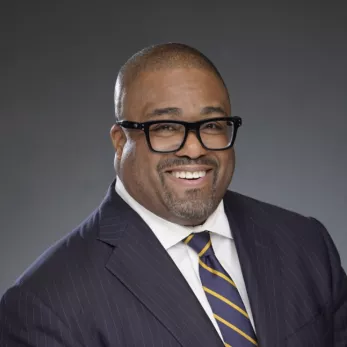
“AB 1460 includes nothing that would increase transparency or require that 340B funds be used to help patients,” he writes at the Sacramento Bee. “It won’t combat issues with 340B in California and will instead embolden these entities to keep cashing in at the expense of patients.”
Advocates point to data showing a decline in the number of contract pharmacies within Black and Latino neighborhoods. Meanwhile, across the country, 340B pharmacies that are supposed to be serving vulnerable communities are expanding in wealthier communities and more affluent neighborhoods.
“Assembly Bill 1460 would allow the most egregious abuses of the 340B program to persist without oversight,” argues Jax Kelly, President & CEO of the Aging and HIV Institute. “It does nothing to require contract pharmacies to pass along savings to patients, or to prioritize reinvestment in underserved communities.”
More than half of 340B pharmacies supposedly serving California’s poor and working families are located in affluent neighborhoods.
Non-Profit Hospitals Suing Patients for Unpaid Medical Bills
Non-profit hospital abuses are well-documented. ProPublica uncovered how one non-profit hospital sued more than 8,300 patients for unpaid hospital bills, including low-income patients that should have qualified for charity care or financial assistance.
Jen Laws, the founder of a non-partisan health policy analysis firm, focusing on the needs of the HIV-affected and Transgender communities, says that non-profit hospitals should share savings with patients.
“In fact, one of the most immediate and meaningful ways to tackle the country’s medical debt crisis would be for 340B covered entities to share the savings with patients,” he points out. “If 340B dollars are supposed to be aimed at ensuring access to care, then concerns over medical financial toxicity shouldn’t be discounted.”
Asm. Chris Rogers
Everyone Agrees: 340B Needs Reform
In a desperate plea for support, even the bill’s author conceded that 340B needs reform.
“340B, like many programs, is not perfect,” acknowledged the bill’s author Asm. Chris Rogers during the Assembly Floor debate on the bill. “There have been calls for reform on certain aspects of the program. Those are being discussed at the federal level, as they should be, as it’s a federal program.”
The bill passed the State Assembly by a narrow margin, with only 44 votes in support on May 19. The bill now heads to the State Senate.
“AB 1460 is a step backward for California,” said Wilcox of Patients Rising. “It ignores systemic abuses in the 340B program, propping up a system where corporations profit while patients are sidelined. The 340B program was designed to make medicines affordable for those in need, not to fuel corporate revenue.”
Californians Deserve Real 340B Reform
Patients Rising, a national nonpartisan patient advocacy group representing thousands of patients, urges California lawmakers to reject AB 1460. Patients Rising calls for 340B legislation that prioritizes patients and accountability. Patients Rising supports reforms that:
- Require Transparency: Require hospitals to report 340B profits and detail how funds support patients or underserved communities.
- Benefit Underserved Communities: Mandate that 340B savings fund clinics in low-income areas, patient transportation, or direct rebates.
- Protect Patients’ Right to Know: Ensure patients know if they’re receiving a 340B drug and what hospitals paid for it.